NVIDIA RTX Spark Ignites a New Era of Personal AI Agents on Windows PCs
NVIDIA unveils RTX Spark superchip, reinventing Windows PCs for personal AI agents. Discover the new hardware, developer toolkit, and Microsoft collaboration driving the future of AI-powered computing.
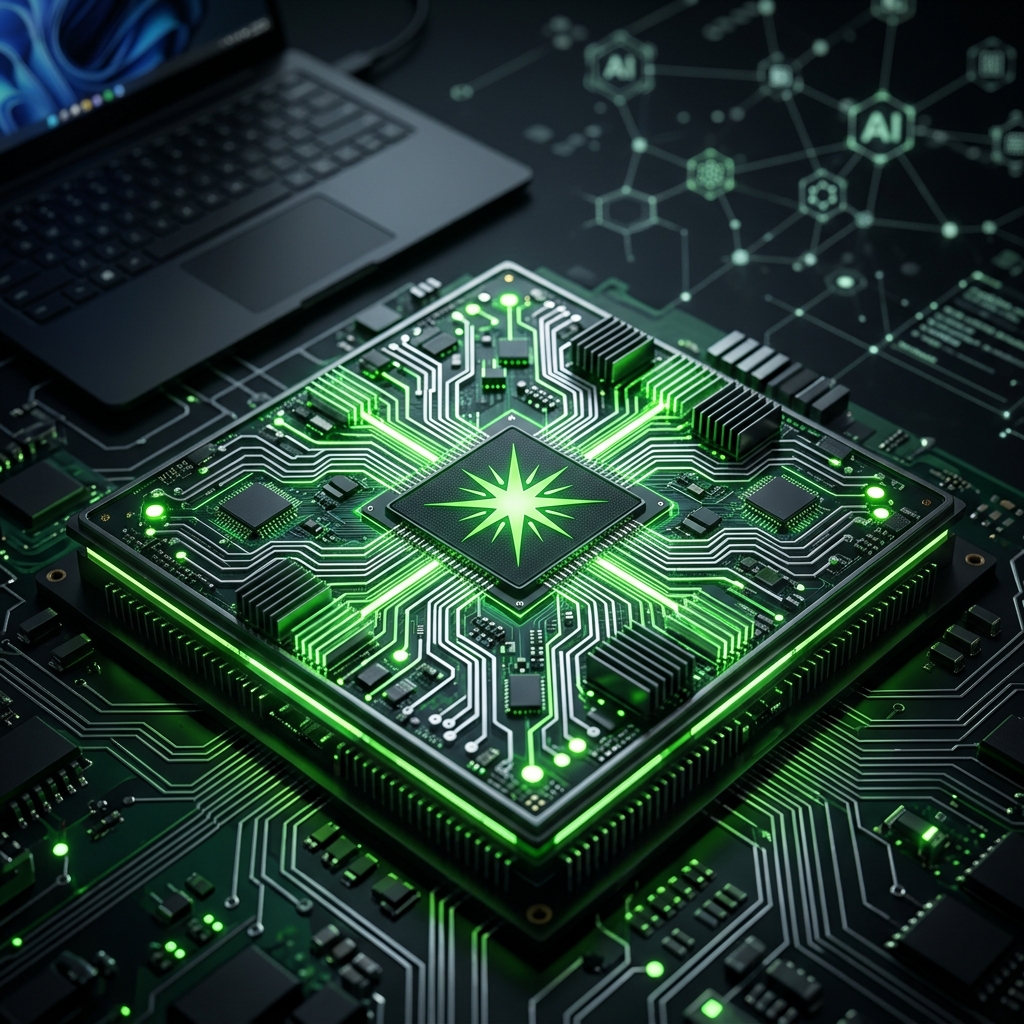
The landscape of personal computing and enterprise development is undergoing a seismic shift, propelled by the relentless march of artificial intelligence. In a groundbreaking announcement, NVIDIA, in collaboration with Microsoft, has unveiled NVIDIA RTX Spark™, a revolutionary superchip poised to redefine Windows PCs for the age of personal AI agents. This isn't merely an incremental upgrade; it's a fundamental re-imagining of what a personal computer can be, transforming it from a mere tool into an intelligent, collaborative teammate.
This pivotal development, announced on May 31, 2026, at NVIDIA GTC Taipei, signals a deep integration of AI capabilities directly into the core of everyday computing, extending from consumer devices to robust enterprise solutions. For developers, this opens up an unprecedented frontier, offering a powerful new platform and a comprehensive toolkit to build, deploy, and manage sophisticated AI agents that can operate locally and efficiently. The implications span across various sectors, promising to accelerate creative workflows, enhance productivity, and usher in a new paradigm of human-computer interaction.
1. RTX Spark: The Engine of Personal AI
At the heart of this revolution is the NVIDIA RTX Spark superchip, engineered to deliver an astounding 1 petaflop of AI performance. This immense computational power, combined with industry-leading power efficiency and up to 128GB of unified memory, positions RTX Spark as the foundational hardware for a new class of Windows PCs. These machines are purpose-built for personal agents, designed to handle complex AI workloads directly on the device, ensuring privacy, responsiveness, and reduced reliance on cloud infrastructure.
The RTX Spark superchip integrates a Blackwell RTX GPU featuring 6,144 CUDA cores and fifth-generation Tensor Cores with FP4 precision. This is seamlessly connected via NVIDIA's NVLink®-C2C chip-to-chip interconnect to a high-performance, 20-core NVIDIA Grace™ CPU. This integrated architecture brings together 30 years of NVIDIA innovation, including NVIDIA CUDA®, NVIDIA RTX™, DLSS, FP4, NVIDIA TensorRT™, NVIDIA OptiX™, Reflex, and G-SYNC®, into a single, ultra-efficient package.
For developers, this means access to unparalleled local AI processing capabilities. Imagine running 120B-parameter Large Language Models (LLMs) with up to 1 million tokens of context directly on a laptop, or rendering ultralarge 90GB+ 3D scenes and editing 12K 4:2:2 video with accelerated AI and graphics performance. This local processing power significantly reduces latency and allows for more complex, data-intensive AI applications to be developed and deployed without constant internet connectivity.
2. Microsoft Collaboration and the Windows-Native Agent Experience
NVIDIA's collaboration with Microsoft is crucial to delivering a native Windows experience for these personal AI agents. This partnership includes the development of new security primitives and NVIDIA OpenShell™, a secure runtime designed to run agents safely and with robust policy and privacy controls on primary devices. OpenShell is not just for consumer PCs; Canonical and Red Hat are also integrating it as a secure, open-source runtime, extending its support across PCs, data centers, and clouds.
This deep integration means that developers can leverage the familiar Windows environment while building highly secure and efficient AI agent applications. The shift from launching apps to simply asking the PC to perform tasks, as envisioned by NVIDIA CEO Jensen Huang, highlights the transformative nature of this development. Developers will be empowered to create agents that can call services, retrieve data, and trigger workflows, moving beyond simple chat assistants to operational actors within the enterprise application layer.
The implications for user experience are profound. Instead of navigating multiple applications, users will interact with intelligent agents that understand context, anticipate needs, and execute complex multi-step tasks. This necessitates a new approach to application design, focusing on agent-centric interfaces and robust API integrations that allow agents to interact seamlessly with existing software and data. Developers will need to consider how their applications can expose functionalities and data in a way that AI agents can effectively utilize them.
3. Empowering Enterprise AI Development with NVIDIA Agent Toolkit
Beyond personal computing, NVIDIA is also significantly bolstering enterprise AI development with its new NVIDIA Agent Toolkit software. This comprehensive suite includes the latest NVIDIA NemoClaw™ blueprints, Nemotron™ open models, the aforementioned OpenShell™ secure runtime, and CUDA-X™ libraries with agent skills. These open-source foundations provide enterprises with the tools to build agents that can work alongside employees at scale.
Leading software companies like Cadence, Dassault Systèmes, Siemens, and Synopsys are already leveraging NVIDIA NemoClaw to build autonomous AI engineers. These digital coworkers are designed to execute complex simulation and verification workflows, drastically compressing weeks of engineering work into mere hours. For example, Siemens is integrating NemoClaw and OpenShell into Fuse EDA AI Agent for orchestrating multi-tool workflows in semiconductor design, while Synopsys is focused on achieving full workflow autonomy for chip design.
A notable addition is the new NVIDIA Nemotron 3 Ultra, a smaller, faster open model optimized for long-running agents. It promises 5x faster inference and up to 30% lower cost for complex agentic tasks, making it ideal for continuous, resource-intensive enterprise applications. Furthermore, NVIDIA CUDA-X libraries, including cuDF, cuOpt, AI-Q, NeMo, PhysicsNeMo, and CUDA-Q, are now accessible to AI agents as 'skills,' enabling them to perform specialized high-performance computing tasks.
This robust toolkit empowers developers to create highly specialized and efficient AI agents for a wide range of enterprise applications, from cybersecurity (as seen with CrowdStrike and Palantir transforming operational decision-making) to healthcare, manufacturing, and financial services. The emphasis on open-source foundations fosters collaboration and innovation within the developer community, accelerating the adoption and refinement of AI agent technologies.
4. Adobe's Creative Suite Reimagined for RTX Spark
The creative industry is also set to benefit immensely from the RTX Spark platform. Adobe is rearchitecting its next-generation Photoshop engine from the ground up to be optimized for GPU-accelerated compositing on RTX Spark. This re-engineering will enable features like live filters, high dynamic range, and modern natural brushing with significantly enhanced performance. The AI-native pipeline is specifically built to harness the full power of RTX Spark, including TensorRT.
Furthermore, Adobe plans to extend Premiere and Photoshop to allow users to create, edit, and design with Windows agents. This means creators will have a collaborative AI teammate to accelerate their workflows, automating repetitive tasks, generating creative variations, and assisting with complex design challenges. Updates to Adobe's creative applications, including Premiere, Photoshop, and Substance, are expected to roll out alongside the availability of RTX Spark-powered devices.
For developers working on creative tools, this presents an opportunity to integrate deeper AI functionalities into their applications, leveraging the local processing power of RTX Spark. The focus shifts towards building intelligent assistants and generative tools that can work alongside human creativity, rather than merely automating simple processes. This integration promises to unlock new levels of efficiency and artistic expression for designers, video editors, and 3D artists.
Comparison Overview
| Component | Description/Key Feature | Developer Relevance |
|---|---|---|
| RTX Spark Superchip | 1 Petaflop AI performance, 128GB unified memory, integrated Blackwell RTX GPU (6144 CUDA cores, 5th-gen Tensor Cores) and 20-core Grace CPU. | Enables powerful local AI model execution, high-performance graphics, and data-intensive workloads directly on device. |
| NVIDIA OpenShell™ | Secure runtime with policy and privacy controls for AI agents on Windows, PCs, data centers, and clouds. | Provides a secure, controlled environment for agent deployment and execution, critical for sensitive data and workflows. |
| NVIDIA Agent Toolkit | Software suite including NemoClaw blueprints, Nemotron models, OpenShell, and CUDA-X libraries with agent skills. | Comprehensive framework for building, customizing, and deploying specialized AI agents for various applications. |
| NVIDIA Nemotron 3 Ultra | Smaller, faster open model optimized for long-running agents, 5x faster inference, 30% lower cost for complex tasks. | Ideal for developing efficient and cost-effective continuous AI agent operations in enterprise environments. |
| NVIDIA CUDA-X Libraries | Accessible as 'skills' for AI agents (e.g., cuDF, cuOpt, AI-Q, NeMo, PhysicsNeMo, CUDA-Q). | Allows agents to leverage specialized high-performance computing libraries for scientific, data processing, and simulation tasks. |
| Microsoft Windows Integration | Native Windows experience for personal agents, new security primitives. | Seamless integration with the Windows OS, enabling agents to interact deeply with system functionalities and user workflows. |
Frequently Asked Questions (FAQ)
Q: What is NVIDIA RTX Spark?
NVIDIA RTX Spark is a new superchip that integrates a powerful Blackwell RTX GPU and a Grace CPU, designed to deliver 1 petaflop of AI performance and up to 128GB of unified memory. It's built to power a new generation of Windows PCs optimized for personal AI agents, enabling complex AI tasks to run locally on the device.
Q: How does RTX Spark benefit developers?
RTX Spark provides developers with unprecedented local AI processing power, allowing for the creation and deployment of sophisticated AI agents that are faster, more private, and less reliant on cloud services. The NVIDIA Agent Toolkit, including NemoClaw blueprints, Nemotron models, and CUDA-X libraries, offers a comprehensive ecosystem for building these agents.
Q: What is NVIDIA OpenShell?
NVIDIA OpenShell is a secure runtime developed in collaboration with Microsoft. It provides policy and privacy controls for AI agents, ensuring they run securely on Windows PCs, as well as across data centers and clouds, with support from Canonical and Red Hat.
Q: Will existing creative applications be compatible with RTX Spark?
Major creative applications like Adobe Photoshop and Premiere are being rearchitected to leverage the full power of RTX Spark, specifically for GPU-accelerated compositing and AI-native pipelines. This will enable significant performance improvements and new AI-powered creative workflows.
Q: When can developers expect to use RTX Spark-powered devices and tools?
RTX Spark-powered slim Windows laptops and compact desktop PCs from various manufacturers are expected to be available in the fall. The NVIDIA Agent Toolkit and related software are being rolled out to support enterprise development, with partners already building solutions.
Try Our Developer Utilities
Simplify your engineering workflows with our free browser-native tools: